SewReady™ Seamstick 1/4" Basting Tape for Sailmaking & Vinyl (50 yds.)
SKU: 20306


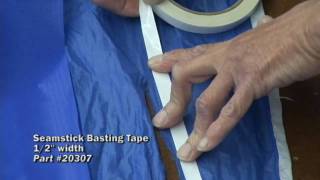
SewReady™ Seamstick 1/4" Basting Tape for Sailmaking & Vinyl (50 yds.)
SKU: 20306
Available: 654
This is a strong and neat double-sided mylar film adhesive that bonds well on smooth Dacron sailcloth, nylon, vinyl or cotton duck.
Description
This is a double-sided mylar film with acrylic adhesive that bonds well on smooth Dacron® sailcloth, nylon and topping vinyl (topping vinyl is a coated vinyl fabric used for topping and cover applications, i.e. T-tops, tarps and marine enclosures). It is strong, neat and nearly invisible. Use basting tape instead of pins on projects for more accurate, even hems and water-resistant seams. Basting tapes are left permanently in place and are invisible. If any needle gumming occurs, intermittently clean the needle with an alcohol swab or an adhesive remover.
Pro Tip: This item should not be used for marine canvas fabrics like Sunbrella®, Sattler® and Top Notch®. It also should not be used for upholstery vinyl like EverSoft™. Instead, use Seamstick 1/4" for Canvas and Upholstery (part #104167) — it is designed to stick to these fabrics much better. We also recommend using the Seamstick for Canvas and Upholstery when installing clear vinyl window material into marine performance fabrics.
Please refer to our chart in the Documents tab, "Basting Tape Selection Tips," which lists which basting tapes can be used on which materials.
Note: Always test the adhesive bond strength for your material and application.
Specifications
| Brand | SewReady |
|---|---|
| Width | 1/4" |
Adhesive Type: Acrylic